
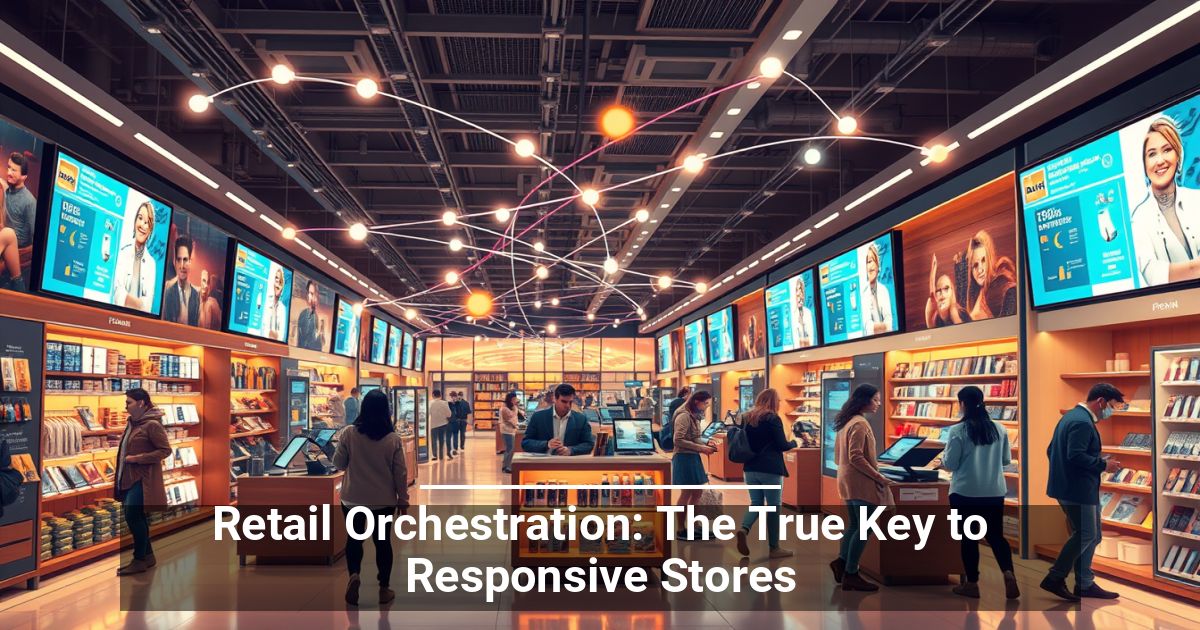
 What good are smart technologies if they don't work together? Equipping your establishment with more screens won't necessarily improve operations when information remains disconnected. Learn about proper retail orchestration and the difference it can make here.
Why More Touchscreens Don't Mean Better Stores
Touchscreens have become a familiar sight in modern retail. They give shoppers convenient ways to browse product catalogs or customize purchases without employee assistance.
While the appeal is understandable, even stores filled with impressive digital installations may struggle to respond to what's actually happening around them.
Online shopping platforms routinely adapt to browsing behavior and product availability. Physical stores often have access to equally valuable information, but their displays remain static throughout the day.
Making Every Interaction Count
Retail orchestration connects otherwise separate technologies through omnichannel retail integration, so they respond to shared information and established operating rules.
For example, a store's inventory system might automatically trigger changes to digital promotions when stock levels fall below a certain threshold. Foot traffic sensors help determine which messages are most relevant in different areas. Artificial intelligence (AI) makes these responses more sophisticated by analyzing patterns and recommending adjustments, although simpler automation can work for many situations.
When implemented effectively, businesses may gain the following worthwhile advantages:
- Promotions that reflect real-time product availability
- More relevant information during busy shopping periods
- Faster campaign adjustments across multiple locations
- Less manual content management for employees
What Makes Responsive Retail Stores Work?
Effective coordination requires reliable information and a consistent way to act on it. Let's examine the components that make it possible.
Operational Data
How well does your business understand the conditions inside its stores? Keeping track of what's happening on the sales floor starts with collecting accurate information, such as:
- Foot traffic
- Dwell time
- Queue length
- Shelf stock availability
- Checkout wait times
- Self-checkout usage
With access to up-to-date data, retailers can make their environments more responsive without necessarily tracking individual shoppers.
Shared Logic
Your store needs clear rules for real-time retail decision-making, including which content appears on a screen and when it should change. For instance, a checkout alert may temporarily replace a promotional advertisement during unusually busy periods. AI can help interpret incoming signals, but human oversight remains essential for setting appropriate boundaries.
Retail Media
In-store screens provide valuable advertising space for brands seeking to reach shoppers near the point of purchase. Retail media orchestration allows businesses to coordinate sponsored campaigns across physical locations and online channels, with shared performance measurements helping advertisers evaluate results.
The challenge stems from balancing commercial opportunities against practical information customers need during their visits.
Convenience Matters More Than Spectacle
At the end of the day, shoppers will always be more interested in getting what they need with minimal hassle than understanding the technology behind it. Elaborate, AI-powered retail operations mean little to someone who still struggles to find a product or navigate a crowded checkout area.
Instead of counting digital features, businesses should evaluate whether their investments in retail orchestration actually make everyday shopping easier.